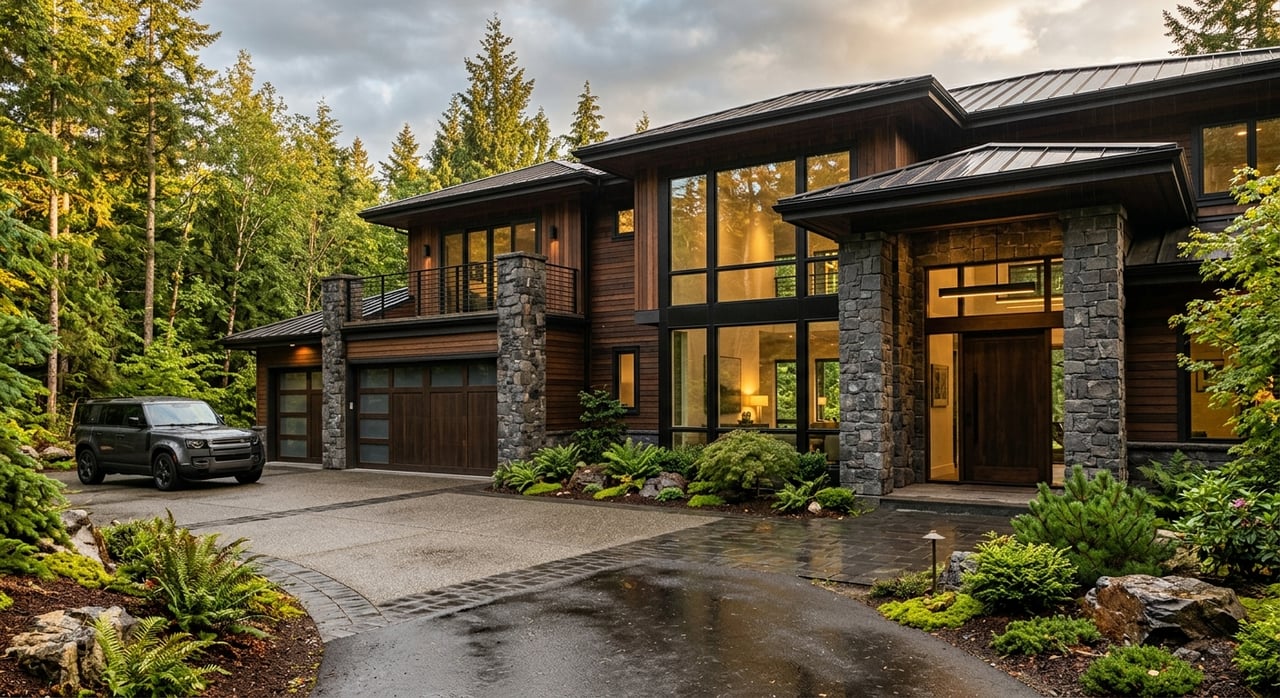
Is Redmond A Smart Place For Single-Family Investment?
May 7, 2026
May 7, 2026
If you are looking at Redmond for a single-family investment, the big question is not whether people want to live there. They do. The real question is whether your strategy fits a market where prices are high, homes move quickly, and the strongest upside may come from long-term appreciation rather than monthly cash flow. This guide will help you weigh Redmond’s demand drivers, pricing, rental math, and planning trends so you can make a smarter decision. Let’s dive in.
For many buyers, Redmond can be a smart place to own a single-family home if your goal is long-term value growth, stable demand, and strong resale appeal. The city has a high-income population, a major employer base, expanding transit access, and a planning outlook built around continued growth. Those factors support the idea that well-located homes can remain desirable over time.
That said, Redmond is usually not a market for investors chasing strong immediate yield. Entry prices are high, and rents do not rise enough to create compelling cash flow on typical single-family purchases. In practical terms, Redmond tends to fit buyers who want a quality asset in a strong Eastside market, not a stand-alone income property with wide monthly margins.
One of Redmond’s biggest strengths is its underlying demand base. The city’s 2024 population estimate was 82,195, which was up 12.2% from the 2020 census base. The 2020 to 2024 ACS also reported a median household income of $162,560, which points to a financially capable buyer and renter pool.
Redmond also has a highly educated population, with 75.3% of residents holding a bachelor’s degree or higher. The city reported a 43.2% owner-occupied housing rate, a median owner-occupied home value of $1,167,800, and a median gross rent of $2,409. Together, those figures reflect a market with real depth, but also one where the cost to buy is already substantial.
Redmond’s employer base is a major part of the investment story. The city lists Microsoft as its largest employer, with more than 44,000 full-time employees, and also names Amazon, Meta, Nintendo of America, and others among the top employers. That concentration of high-wage jobs helps support both buyer demand and rental demand.
Microsoft’s campus refresh adds another layer to the story. The project replaces 12 older buildings with about 3 million square feet across 17 new buildings and connects the campus to light rail. For investors, that matters because employment access and transit convenience often strengthen both tenant interest and future resale appeal.
Transit has become a more meaningful part of Redmond’s value proposition. Sound Transit opened 2 Line service to Redmond Technology Station in April 2024 and extended it to Downtown Redmond in May 2025. Better rail access can make certain areas more attractive to buyers who value commuting options and everyday convenience.
The city also reports 47 parks, 41 miles of developed trails, and 1,381 acres of park and trail open space. Redmond says there are 12 schools within city limits and that the city is served primarily by Lake Washington School District #414. For an investor thinking about resale, these kinds of amenities can help widen the future buyer pool.
Redmond is still a high-price market, and that is central to any investment decision. Recent market snapshots from different sources vary somewhat, but they point in the same general direction: homes are expensive, and the market remains fairly liquid.
Redfin reported a March 2026 median sale price of $1,395,000, up 4.0% year over year, with homes selling in about 13 days. Zillow’s March 31, 2026 home value index was $1,402,276, down 2.4% year over year, with pending activity in about 7 days. Realtor.com described Redmond as a seller’s market in March 2026, with a $1.35 million median listing price, 325 homes for sale, and a median of 25 days on market.
The exact numbers differ because the sources use different methods and timeframes. Still, the broader takeaway is clear: Redmond remains expensive, active, and relatively fast-moving, even if price growth is not uniform at every moment.
You should not treat Redmond as one single market. Pricing varies meaningfully by neighborhood, and that can affect both your entry cost and your exit strategy. Zillow’s March 2026 neighborhood values ranged from $755,503 in Bear Creek to $2,110,134 in North Redmond, with Education Hill at $1,347,023 and Overlake at $1,521,370.
That spread matters for investors because the same citywide headline can hide very different risk and opportunity profiles. A home in one part of Redmond may appeal more strongly to future owner-occupants, while another may face more direct competition from nearby housing alternatives. In a market like this, buying the right location often matters more than buying at the city average.
If you are investing in Redmond, the most compelling case is still appreciation. The city’s housing needs assessment found that Redmond’s median home sale price rose from $378,595 in 2000 to $823,300 in 2019. The city characterized that trend as roughly 4% average annual growth over that period.
No market moves in a straight line, and recent year-over-year data shows that price growth can cool or vary by source. Even so, the longer-run history supports the idea that Redmond has rewarded patient owners. That is why many investors view this market as a long hold rather than a short-term flip or pure income play.
Redmond does have real rental demand. High-wage employment, transit access, and a supply pipeline focused on adding housing choices near rail all help support renter interest. If your goal is finding tenants for a well-located home, Redmond has several fundamentals working in your favor.
The challenge is the math. Zillow estimated average rent in Redmond at $2,400 in March 2026, and the ACS reported a median gross rent of $2,409. By comparison, the ACS showed a median monthly owner cost with a mortgage of $3,798.
Using Zillow’s rent estimate and home value figure produces a rough gross annual yield of about 2.05% before taxes, insurance, maintenance, vacancy, and financing. That is why Redmond is generally seen as an appreciation-first market. Once you factor in carrying costs, the margin for positive cash flow can get very tight.
If you are buying a detached home in Redmond, you are likely making a bet on asset quality and future demand, not immediate income. That can still be a sound strategy if your timeline is long and your expectations are realistic. The best fit is often a buyer who values a strong Eastside location, a broad resale audience, and the possibility of long-run value growth.
On the other hand, if you need the property to deliver strong monthly income from day one, Redmond may not check that box. The market can still make sense in a broader portfolio, but the local data does not support a cash-flow-first thesis for most single-family purchases.
Redmond’s planning direction is another important piece of the puzzle. Downtown Redmond is one of two designated regional growth centers, with nearly 6,000 residents and more than 10,000 jobs. The city says this area is expected to accommodate one-third of planned housing growth through 2030.
Since 2010, the city reports that more than 1,200 new multifamily homes have been permitted downtown. The downtown zoning rewrite also allows 12-story buildings near the light rail station with incentives. That tells you the city is actively planning for more housing in transit-oriented areas.
For detached-home investors, this supply story cuts both ways. Transit-served areas may gain convenience and visibility, but they may also face more future competition from new multifamily housing. If your property sits near an area where housing choices are expanding quickly, you should weigh how that might affect renter demand and resale positioning over time.
At the same time, established single-family neighborhoods may benefit from relative scarcity. As the city channels more growth into mixed-use and transit-oriented districts, existing detached-home areas may continue to attract buyers who specifically want that housing type. That dynamic can support long-term owner-occupant demand.
Redmond 2050 was adopted in November 2024 and updated in June 2025. The plan explicitly supports mixed-use, transit-served neighborhoods with greater housing and transportation choice. For investors, that signals a city planning for continued growth rather than stagnation.
This does not automatically mean every property will outperform. It does mean Redmond is building around jobs, transit, and housing demand in a coordinated way. For a long-term buyer, that planning consistency can be a positive sign.
Yes, if your strategy matches the market. Redmond can be a smart place for single-family investment when you are focused on long-term appreciation, strong tenant demand, and eventual resale to a well-qualified owner-occupant buyer. The city’s income profile, employer concentration, transit expansion, and overall planning direction all support that case.
But if you are looking for strong immediate cash flow, the data points the other way. High purchase prices and modest gross yield make Redmond a tougher market for income-focused investors. In simple terms, Redmond is usually a quality-market, long-hold play rather than a high-yield one.
If you are weighing where a Redmond home fits into your broader Eastside real estate strategy, working with a local advisor can help you think beyond citywide averages and focus on the right micro-location, property type, and resale story. If you want to talk through Eastside single-family opportunities with a grounded, local perspective, connect with Cheryl Hill.
Stay up to date on the latest real estate trends.




Cheryl is humbled and honored to serve buyers and sellers in the often difficult process of buying or selling a home. Contact Cheryl today to discuss all your real estate needs!
Contact Cheryl To Learn More

ADDRESS
700 110th Ave NE #270
Bellevue WA 98004